5 International-Inspired Recipes for Home Cooking

These five home-kitchen adaptations bring together noodles, spinach curry, marinated pork tacos, a savory crepe, and a chicken-and-shrimp rice dish. They are simplified versions, rather than claims to reproduce every traditional technique. Choose a dish around the equipment and ingredients you already have.
Read the complete method and prepare the ingredients before heating the pan. Rice and noodle brands absorb liquid differently, so use their package directions alongside the checks below. For meat and seafood, check doneness rather than relying only on browning.
1. Pad Thai-style noodles
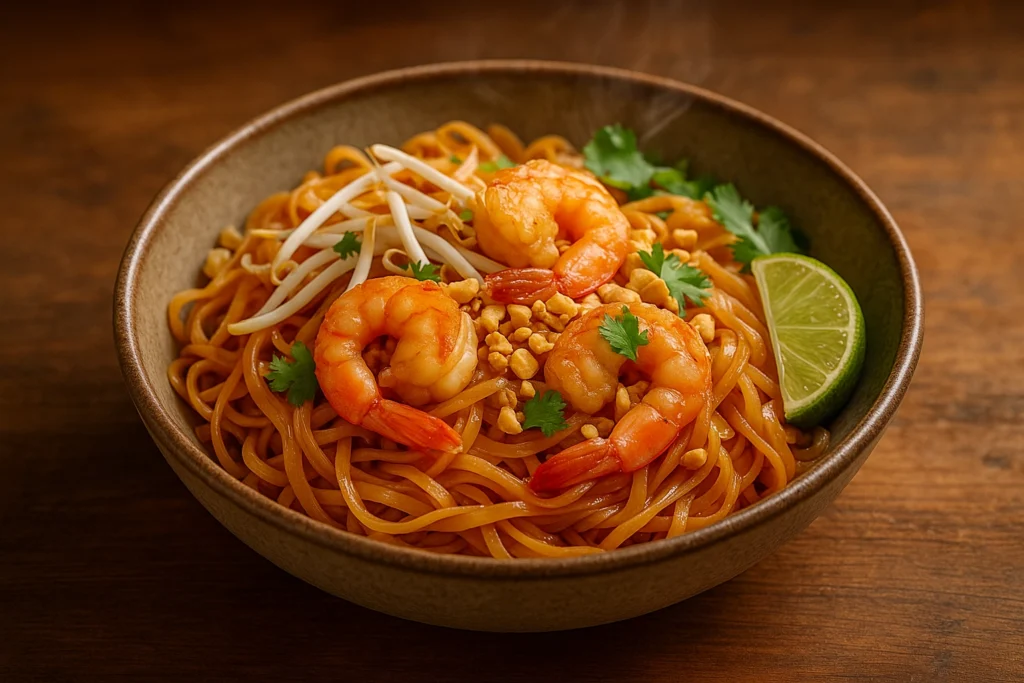
A wide frying pan works if you do not have a wok. Have the sauce mixed before you start: the final assembly moves quickly.
- 200 g rice noodles
- 2 tablespoons tamarind paste
- 2 tablespoons fish sauce, or soy sauce for a vegetarian adaptation
- 1 tablespoon brown sugar
- 1 egg
- 100 g firm tofu or peeled shrimp
- 1 cup bean sprouts
- ¼ cup crushed peanuts
- Lime wedges and a little cooking oil
Prepare: Soften the rice noodles according to the package, then drain. Mix the tamarind paste, fish sauce, and sugar in a small bowl. Concentrated tamarind varies in strength; check its label and dilute if directed.
Cook: Heat a little oil in a wide pan. Cook cubed tofu until lightly browned, or shrimp until the flesh is opaque. Move to one side, add the egg, and scramble until set. Add noodles and sauce, tossing gently so the noodles are coated. If they remain firm, add a small splash of water and continue tossing. Fold in the bean sprouts and heat through. Finish with peanuts and lime.
For a vegan adaptation, choose tofu and soy sauce and omit the egg. Simply swapping the sauce does not make an egg-and-shrimp dish vegan.
2. Spinach and paneer curry
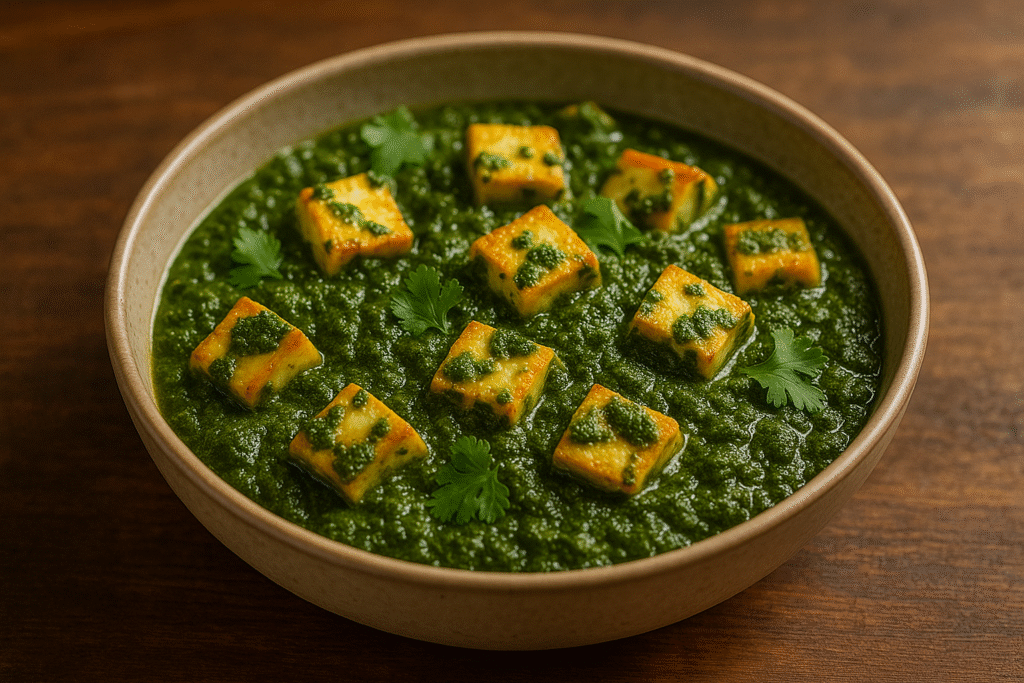
Drain the spinach well so the sauce does not become watery. Paneer and firm tofu give different textures; either can be used in this simplified version.
- 500 g fresh spinach
- 200 g paneer or firm tofu, cubed
- 1 onion, chopped
- 2 garlic cloves, minced
- 1 teaspoon cumin
- 1 teaspoon garam masala
- ½ cup cream or coconut milk
- A little ghee or oil for cooking
Prepare: Wash the spinach, briefly blanch it in boiling water until wilted, drain, and blend to the texture you prefer. For a thicker sauce, press out excess water before blending.
Cook: Soften the onion in a little ghee or oil over medium heat. Add garlic and spices and stir until fragrant without letting the garlic burn. Add the paneer or tofu, turn gently, then stir in the spinach and cream. Simmer gently for about 5 minutes, stirring and adding a splash of water if needed. Serve with rice or flatbread.
For a dairy-free adaptation, use tofu, oil, and coconut milk together; changing only the cream leaves paneer and ghee in the dish.
3. Al pastor-inspired pork tacos
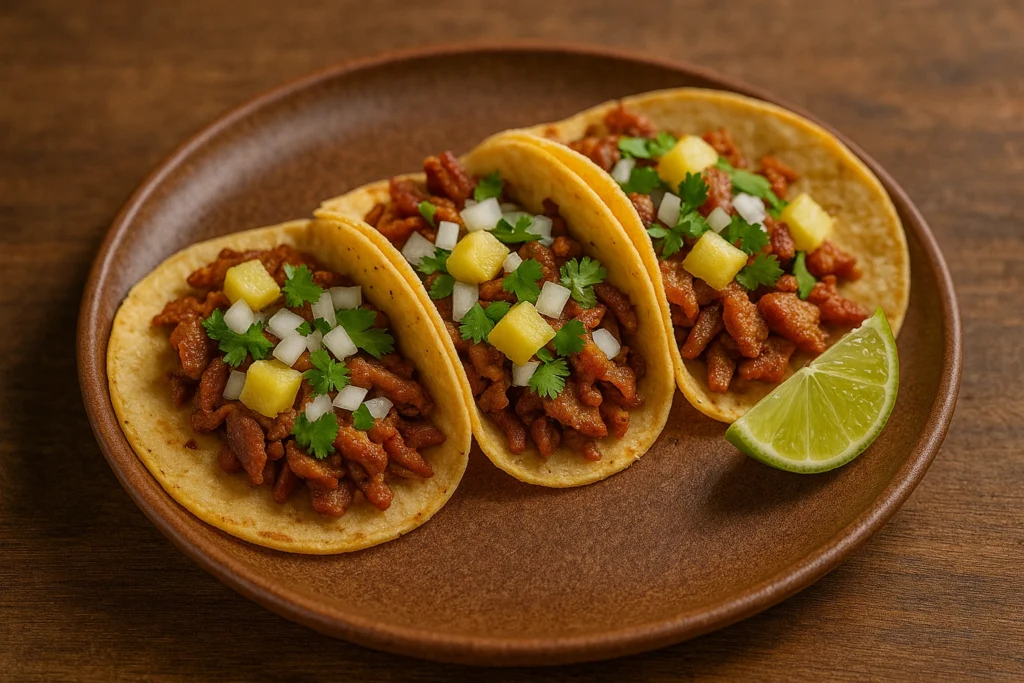
This pan or grill version uses achiote and pineapple juice for the marinade. It is an adaptation for home cooking, without the traditional vertical spit.
- 500 g pork shoulder, thinly sliced
- 3 tablespoons achiote paste
- ½ cup pineapple juice
- 1 tablespoon vinegar
- 1 teaspoon oregano
- 1 onion, chopped
- Corn tortillas
- Pineapple pieces and cilantro for serving
Marinate: Mix the achiote paste, pineapple juice, vinegar, and oregano. Coat the pork, cover, and refrigerate for at least 2 hours. Keep the serving ingredients separate from the raw meat and marinade.
Cook: Heat the grill or pan and cook the pork in batches, turning to cook both sides. Do not use charring alone to judge doneness. For whole-muscle pork, check for at least 145°F (63°C) with a food thermometer and allow a 3-minute rest. Use clean utensils for the cooked meat. Warm the tortillas and fill with pork, onion, pineapple, and cilantro.
4. Jianbing-inspired savory crepe
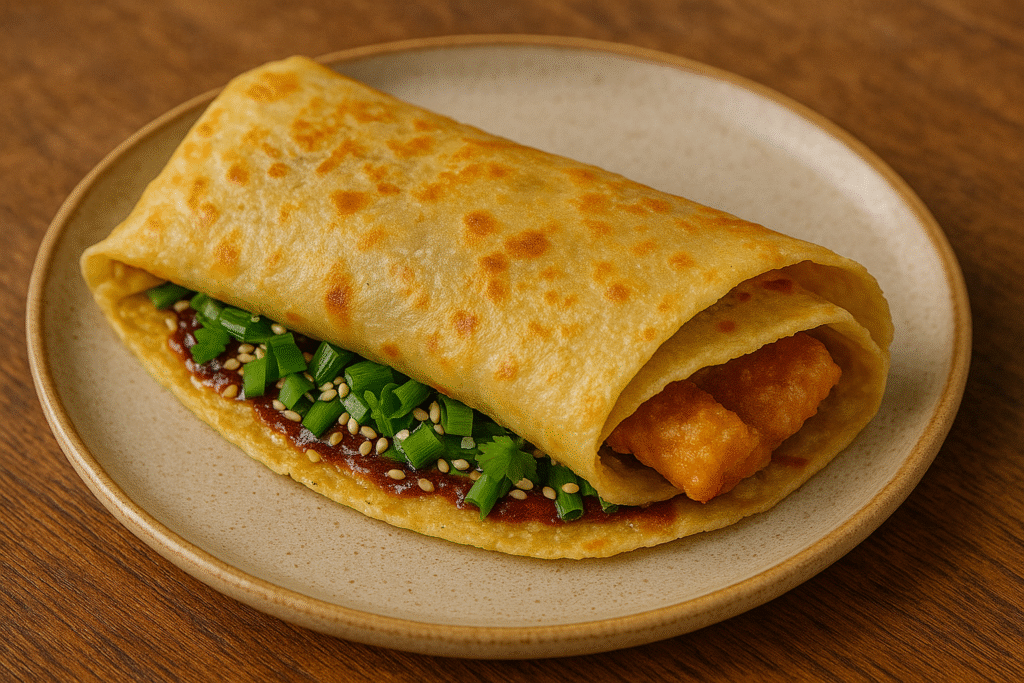
A thin crepe, egg, herbs, and a crisp filling create the contrast in this simplified version. Use a nonstick pan you can comfortably tilt.
- ½ cup flour
- ½ cup water
- 1 egg
- Hoisin sauce and chili paste, to taste
- Sliced scallions and chopped cilantro
- Ready-to-eat crispy wonton strips or crackers
Make the batter: Whisk the flour and water until smooth. It should spread when the pan is tilted; if necessary, add water a little at a time rather than all at once.
Cook and fill: Lightly oil the pan and heat over medium heat. Pour in enough batter for a thin layer and tilt to spread it. Once the surface starts to set, spread the beaten egg over the top. Cook until the egg is set, turning the crepe carefully if needed. Add a thin layer of sauce, herbs, and the crisp filling. Fold and serve immediately so the filling stays crunchy.
Use cooked, ready-to-eat crisp pieces for the filling; uncooked wonton wrappers are not a substitute for crispy strips.
5. Chicken and shrimp rice, paella-style
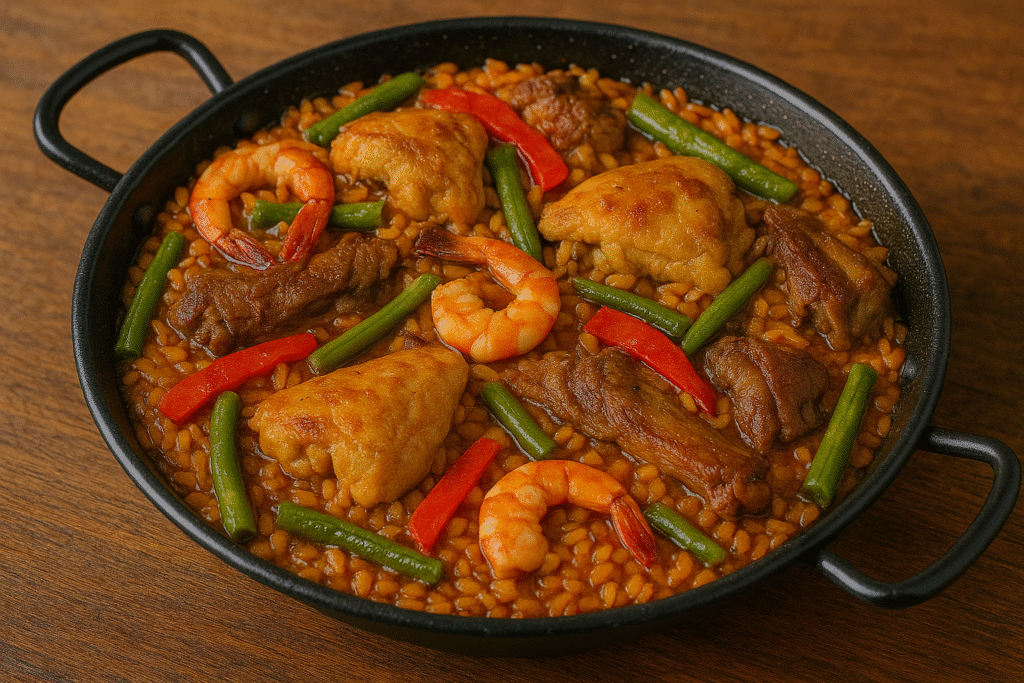
This version combines chicken and seafood and is described as paella-style rather than traditional Paella Valenciana. Use a wide pan and check the rice package for its liquid ratio and cooking time.
- 2 cups paella rice
- 4 cups chicken broth, plus more hot broth if the rice requires it
- 1 teaspoon saffron
- 200 g boneless chicken, cut into small pieces
- 150 g peeled shrimp
- 1 onion, diced
- 1 red bell pepper, chopped
- A little olive oil for cooking
Start the base: Warm the broth with the saffron. In a wide pan, heat a little olive oil, brown the chicken, and add the onion and pepper. Cook until the vegetables soften. Browning is only the first step; the chicken must finish cooking with the rice.
Cook the rice: Stir in the rice and hot broth, spread evenly, and bring to a simmer. Follow the rice package’s timing and avoid stirring repeatedly. If the liquid disappears before the grains are tender, add a little hot broth and continue cooking. Do not try to form a browned bottom while the rice is still hard.
Finish safely: Add the shrimp while the rice is still simmering, leaving enough cooking time for the shrimp to become opaque throughout. Check that the chicken reaches 165°F (74°C). If the rice is ready first, finish any undercooked chicken or shrimp separately before serving. Rest briefly off the heat before portioning.
Doneness and substitutions
The meat and seafood checks above follow the FoodSafety.gov cooking chart. Different cuts, thicknesses, and appliances change cooking time. Keep raw meat utensils separate from ready-to-eat toppings.
These dishes include common allergens such as wheat, egg, milk, soy, fish, shellfish, and peanuts, depending on the version. Check sauce and packaged ingredient labels when cooking for someone with an allergy.
Looking for a cold meal instead? Try our Tunacado-style cucumber roll.
Updated September 24, 2026.


Post Comment